Tie Dye Techniques: A Comprehensive Guide (PDF Focus)
Discover a vibrant world of color with our tie dye techniques PDF! This guide unveils essential instructions, easy patterns like spirals and stripes,
and advanced folding methods.
Learn to create unique marbled designs on shirts, tote bags, and more, mastering dye application and post-dyeing care for lasting brilliance.
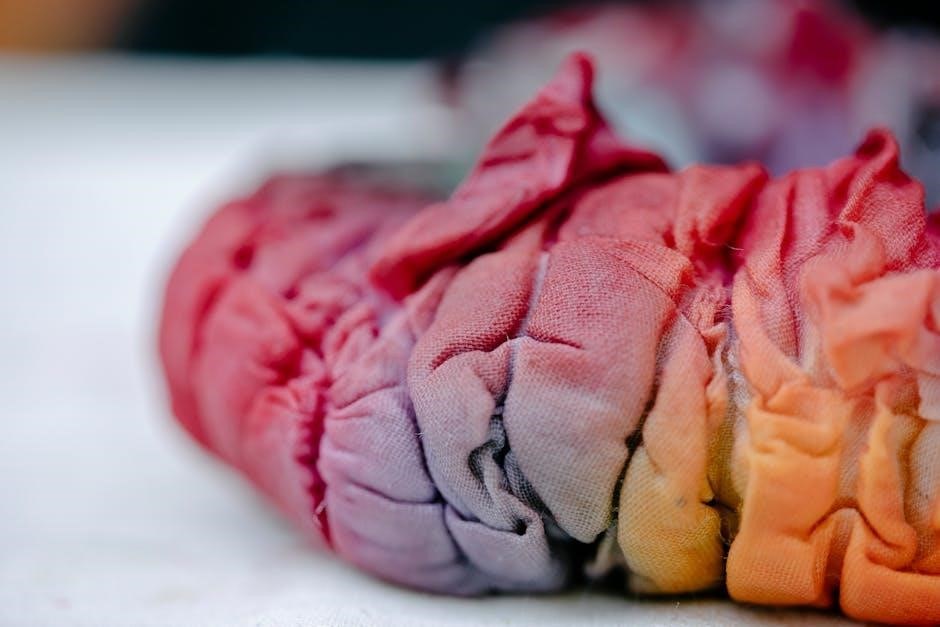
Tie dye, a timeless textile art, has experienced a remarkable resurgence in popularity, captivating creators of all ages and skill levels. This comprehensive guide, focused on tie dye techniques presented in a convenient PDF format, serves as your gateway to mastering this expressive craft. From its humble beginnings as a method for resourceful fabric decoration, tie dye has evolved into a vibrant form of self-expression and a beloved trend in fashion and design.
Whether you’re a complete beginner eager to explore the basics or an experienced crafter seeking to refine your skills, this resource offers a wealth of knowledge. We’ll delve into the core principles of tie dye, covering everything from fabric preparation and dye selection to various tying and application techniques. Expect to find detailed instructions for classic patterns like spirals, bullseyes, and stripes, alongside more innovative and complex designs.
This PDF is designed to be your go-to reference, providing step-by-step tutorials, helpful tips, and troubleshooting advice to ensure your tie dye projects are a resounding success. Prepare to unleash your creativity and transform ordinary fabrics into extraordinary works of art!
What is Tie Dye and its History?
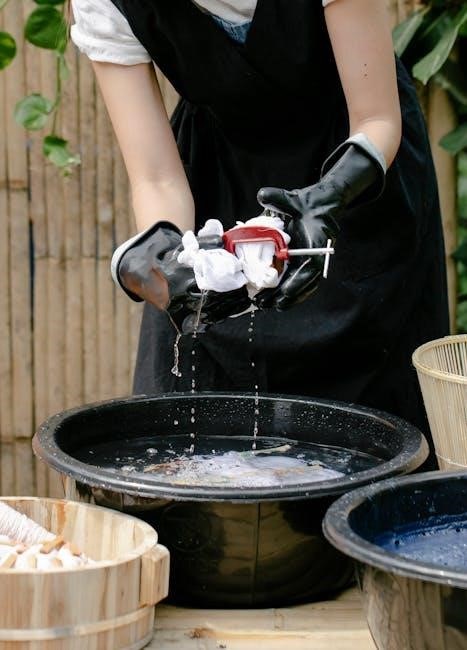
Tie dye is a resist dyeing technique, producing patterns on fabric by preventing dye from reaching certain areas. This is achieved through folding, twisting, pleating, or tying the fabric before applying dye – hence the name! The resulting designs are wonderfully unpredictable and uniquely expressive, making each piece a one-of-a-kind creation. Our tie dye techniques PDF will guide you through these processes.
The history of tie dye stretches back millennia, with evidence found in ancient cultures worldwide. Variations of resist dyeing existed in Peru, Japan (Shibori), India, and Indonesia centuries ago. However, the modern Western association with tie dye blossomed in the 1960s and 70s, becoming synonymous with counterculture and self-expression.
Today, tie dye continues to evolve, embracing new techniques and materials. This PDF explores both traditional methods and contemporary approaches, offering a comprehensive overview of this fascinating art form. From its historical roots to its modern revival, tie dye remains a vibrant and accessible creative outlet for all.
Essential Materials for Tie Dyeing
Embarking on your tie dye journey requires gathering a few key supplies. Our tie dye techniques PDF details everything you’ll need for successful and vibrant results. First, you’ll require fabric – 100% cotton works best for dye absorption. Next, choose your dyes; reactive dyes are recommended for bright, long-lasting colors, while all-purpose dyes offer convenience.
Essential tools include squeeze bottles for precise dye application, rubber bands to create resists, and gloves to protect your hands. A tie dye kit, like Tulip One-Step, provides a convenient all-in-one solution. Soda ash is crucial for preparing the fabric, ensuring optimal dye uptake. Buckets are needed for mixing dyes and rinsing fabric.
Don’t forget protective coverings for your work surface! Old newspapers or plastic sheeting will prevent staining. Finally, a well-ventilated area is vital for safe dye handling. This PDF provides a complete checklist, ensuring you have everything at your fingertips before you begin your colorful adventure.
Preparing Your Fabric for Tie Dye
Successful tie dye begins with proper fabric preparation, detailed in our tie dye techniques PDF. Start by washing your garment to remove any sizing or finishes that could hinder dye absorption. Avoid using fabric softener, as it creates a barrier. Once washed, the fabric should be damp, not soaking wet, before applying the dye – this aids in color spreading.
A crucial step involves pre-treating the fabric with soda ash. Dissolve one cup of soda ash per gallon of warm water, ensuring it’s fully dissolved. Submerge your fabric in this solution for 5-15 minutes, wearing gloves for protection. This process raises the fabric’s pH, allowing the dye to bond effectively.
After soaking, wring out the excess soda ash solution – do not rinse! The fabric is now ready for tying and dyeing. Our PDF emphasizes the importance of this step for achieving vibrant, long-lasting colors. Proper preparation is the foundation for stunning tie dye creations.
Basic Tie Dye Techniques
Explore fundamental tie dye techniques within our PDF, including the classic spiral, vibrant bullseye, simple stripes, and the effortlessly cool scrunch methods.
Spiral Tie Dye Method
The spiral tie dye method, a cornerstone of tie dye techniques detailed in our PDF guide, is remarkably accessible for beginners yet offers stunning results. Begin by laying your fabric flat and pinching the center.
Twist the fabric clockwise or counterclockwise, creating a tight, disc-like shape resembling a cinnamon roll. Secure this spiral with multiple rubber bands, dividing the fabric into pie-shaped wedges. The more bands you use, the more defined your spiral will be.
Apply dyes to each wedge, utilizing contrasting colors for a bold effect or complementary shades for a softer look. Ensure the dye penetrates the fabric thoroughly. Allow the dye to set for the recommended time, then rinse and wash as instructed in the PDF. This method is perfect for shirts, tote bags, and other circular or square fabrics, offering a classic and recognizable tie dye pattern.
Bullseye Tie Dye Technique
The Bullseye tie dye technique, comprehensively explained in our tie dye techniques PDF, creates concentric circles of color, offering a visually striking design. Start by pinching the fabric where you want the center of your bullseye to be.
Pull the fabric upwards, forming a cone shape. Secure the fabric with rubber bands at regular intervals along the cone, creating sections. These bands will define the rings of your bullseye.
Apply different dyes to each section between the rubber bands, ensuring each ring receives a distinct color. For a classic bullseye, alternate colors. Allow the dye to set according to the PDF’s instructions, then rinse thoroughly. This technique works exceptionally well on t-shirts and other garments, producing a vibrant and eye-catching pattern. Experiment with color combinations for unique results!
Stripes Tie Dye Pattern
Achieving a classic striped effect with tie dye is remarkably simple, as detailed in our tie dye techniques PDF. Begin by folding your fabric accordion-style – like creating pleats. The tighter the folds, the finer the stripes will be.
Secure the folded fabric tightly with rubber bands spaced evenly along its length. These bands will act as barriers, preventing the dye from bleeding into adjacent sections.
Apply your chosen dyes along the exposed sections between the rubber bands. You can use a single color for uniform stripes or alternate colors for a rainbow effect. Our PDF provides guidance on dye application methods, including bottles and brushes. After allowing the dye to set, rinse thoroughly to reveal crisp, vibrant stripes. This pattern is perfect for creating bold and fashionable garments!
Scrunch Tie Dye Method
Embrace the wonderfully unpredictable nature of the scrunch tie dye method, fully explained within our comprehensive tie dye techniques PDF. This technique is incredibly beginner-friendly and yields beautifully organic results. Start with your fabric laid flat, then simply begin scrunching it randomly, gathering sections and compressing them together.
Secure the scrunched fabric with multiple rubber bands, wrapping them around in various directions. The more bands you use, the more intricate the pattern will become. Don’t be afraid to experiment with different scrunching and banding techniques!
Apply your dyes directly onto the scrunched fabric, allowing the colors to blend and mingle. Our PDF details optimal dye saturation for vibrant outcomes. Once the dye has set, rinse and reveal a unique, textured masterpiece. This method is ideal for creating one-of-a-kind wearable art!

Advanced Tie Dye Techniques
Unlock intricate designs with our tie dye techniques PDF! Explore complex folding, ice dyeing, Shibori-inspired patterns, and ombre effects for stunning results.
Folding Techniques for Complex Patterns
Delve into the art of intricate tie dye techniques with our comprehensive PDF guide! Beyond basic spirals and stripes, mastering folding is key to unlocking truly unique and captivating designs. This section details advanced methods for creating complex patterns, transforming simple fabric into wearable art.
Explore techniques like the crumple method, where fabric is randomly scrunched and bound, resulting in unpredictable and organic patterns. Learn about accordion folds, creating linear designs with repeating motifs. Discover how to utilize diagonal folds for dynamic, geometric effects. The PDF provides step-by-step illustrations and clear instructions for each technique.
Understand the importance of precise folding and secure binding to achieve crisp, defined lines. Experiment with different folding combinations to create personalized patterns. Master the art of manipulating fabric to achieve desired shapes and textures. This section empowers you to move beyond beginner techniques and create truly exceptional tie dye masterpieces!
Ice Dyeing: A Unique Approach
Discover a mesmerizing tie dye technique with our detailed PDF guide: Ice Dyeing! This innovative method utilizes ice to create soft, watercolor-like effects, offering a departure from traditional dye application. Unlike immersion or bottle methods, ice dyeing allows for unpredictable and beautifully blended colors.
Learn how to arrange fabric on a rack and generously cover it with ice. Sprinkle powdered reactive dyes directly onto the ice, allowing them to melt and interact organically with the fabric. The melting ice acts as a resist, preventing the dye from spreading too quickly and creating unique patterns.
Explore variations in ice placement, dye color combinations, and fabric types to achieve diverse results. The PDF provides guidance on dye ratios, recommended fabrics, and troubleshooting common issues. Master this captivating technique and unlock a new dimension of creativity in your tie dye projects!
Shibori Inspired Tie Dye
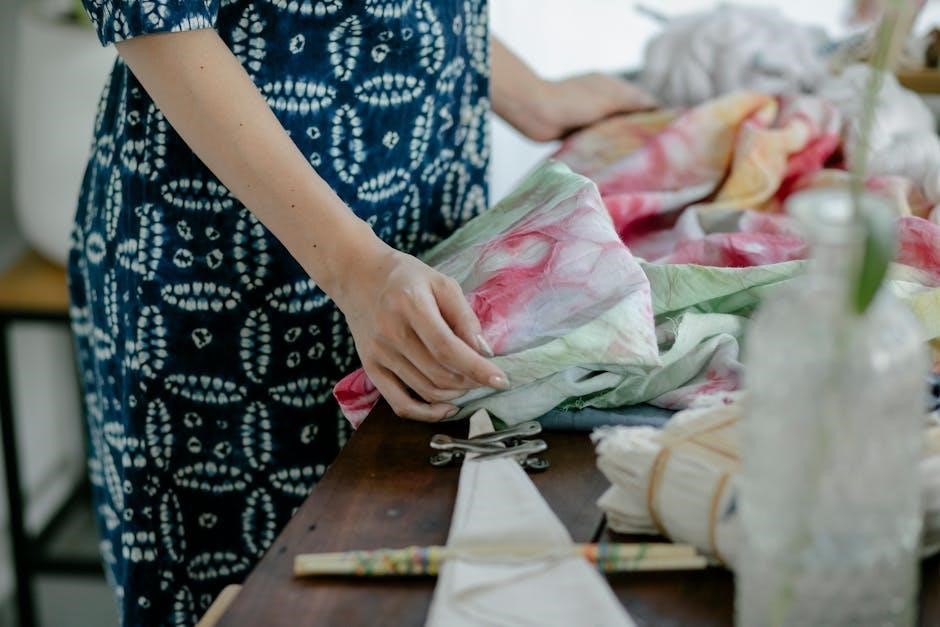
Delve into the ancient Japanese art of Shibori with our comprehensive tie dye techniques PDF! This section explores how to adapt traditional Shibori methods – like binding, stitching, folding, twisting, and compressing – to achieve stunning, textured patterns on fabric using modern tie dye processes.
Learn about various Shibori resists, including itajime (shape-resist), kanoko (binding), and arashi (pole-wrapping). The PDF provides step-by-step instructions and visual guides for replicating these techniques with readily available materials. Discover how precise folding and clamping, or intricate stitching, can create geometric and organic designs.
Explore the nuances of dye absorption and color placement when using Shibori-inspired resists. Master techniques for achieving crisp lines, subtle gradients, and unique textural effects. This guide empowers you to elevate your tie dye artistry with a touch of Japanese elegance and precision!

Ombre Tie Dye Effects
Unlock the captivating beauty of Ombre tie dye with our detailed tie dye techniques PDF! This section focuses on creating seamless color gradients, transitioning from light to dark shades within your designs. Learn how to strategically apply dye to achieve a sophisticated, blended effect, moving beyond traditional bold patterns.
The PDF provides clear instructions on controlling dye concentration and application timing to achieve desired Ombre results. Discover techniques for both horizontal and vertical gradients, experimenting with multiple color combinations for a truly unique look. Explore methods for creating subtle, pastel Ombre effects, as well as dramatic, high-contrast transitions.
Master the art of dye dilution and layering to build depth and dimension. This guide offers practical tips for preventing color muddling and ensuring smooth, even blends. Elevate your tie dye projects with the refined elegance of Ombre, adding a touch of modern artistry to your creations!

Dyeing Process & Considerations
Explore our tie dye techniques PDF for expert guidance on dye selection, application, and setting. Discover vital tips for vibrant colors and
lasting results!
Choosing the Right Dyes (Reactive vs. All-Purpose)
Our tie dye techniques PDF details the crucial differences between reactive and all-purpose dyes, empowering you to make informed choices for stunning results. Reactive dyes, like Procion MX, form a permanent bond with natural fibers – cotton, linen, rayon – offering exceptional colorfastness and vibrancy. They require a soda ash fixative for proper bonding, as highlighted in our guide.
All-purpose dyes, such as Rit, are more versatile, working on a wider range of fabrics including synthetics. However, they don’t bond as strongly, leading to potential fading with repeated washing. While convenient, they generally produce less intense colors on cellulose fibers.
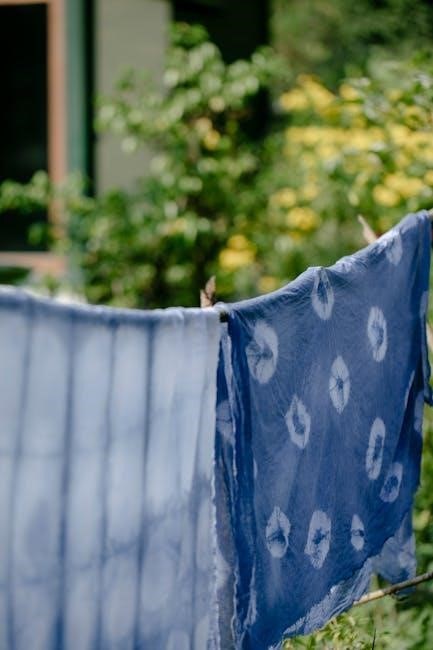
The PDF emphasizes that reactive dyes are the preferred choice for high-quality, long-lasting tie dye projects, especially on natural fabrics. It provides a comprehensive comparison chart outlining the pros and cons of each dye type, helping you select the best option based on your fabric and desired outcome. Understanding these distinctions is key to achieving professional-looking tie dye!
Dye Application Methods (Bottles, Brushes, Immersion)
Our tie dye techniques PDF comprehensively explores various dye application methods, each offering unique creative possibilities. Precision application is easily achieved using squeeze bottles, ideal for detailed patterns like spirals and bullseyes. The PDF includes tips on controlling dye flow and preventing unwanted bleeding.
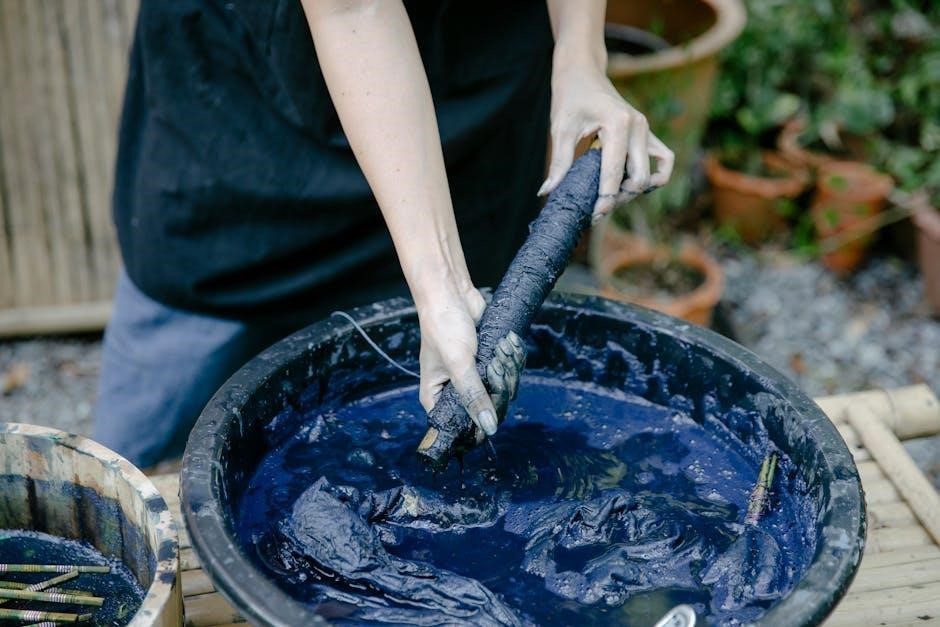
For broader coverage or ombre effects, brushes are an excellent choice, allowing for controlled blending and layering of colors. Immersion dyeing, where the entire fabric is submerged in a dye bath, is perfect for solid color washes or creating gradient effects.
The guide details the advantages and disadvantages of each method, alongside visual examples. It also covers techniques for creating custom dye blends and achieving specific color intensities. Furthermore, the PDF provides safety guidelines for handling dyes and cleaning up spills, ensuring a smooth and enjoyable tie dye experience.
Using Soda Ash for Vibrant Colors
Our tie dye techniques PDF emphasizes the crucial role of soda ash in achieving vibrant, long-lasting colors, particularly when using reactive dyes. Soda ash, or sodium carbonate, acts as a fixative, helping the dye bond permanently with the fabric fibers. The PDF provides a detailed explanation of its chemical function and why it’s essential for optimal dye uptake.
Detailed instructions are included on creating a soda ash solution – typically one cup per gallon of warm water – and safely soaking the fabric for 5-15 minutes prior to dyeing. Crucially, the PDF stresses the importance of wearing gloves and eye protection when handling soda ash, as it can cause skin irritation.
The guide also addresses common questions about reusing the soda ash solution and adjusting the concentration for different fabric types. It highlights how skipping this step can result in faded colors and poor wash fastness, ensuring your tie dye creations remain brilliant for years to come.
Dye Setting and Rinsing Procedures
This tie dye techniques PDF dedicates a significant section to the critical steps of dye setting and rinsing, ensuring colorfastness and preventing unwanted bleeding. The guide details the importance of allowing the dye to ‘set’ for a sufficient period – typically 6-24 hours – after application, depending on the dye type and fabric.
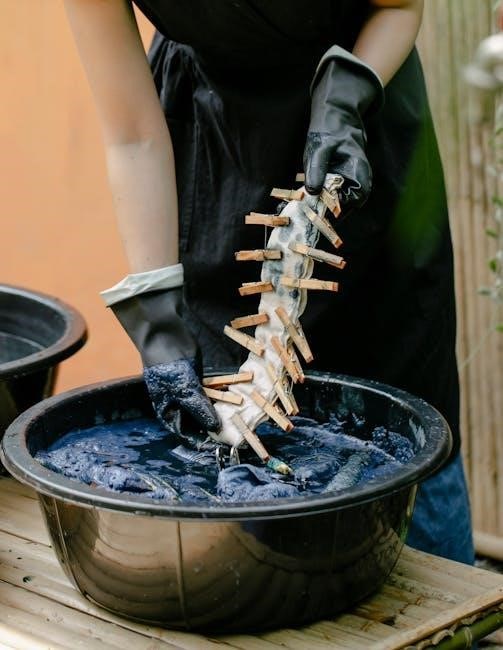
Step-by-step instructions are provided for the initial cold-water rinse, emphasizing the gradual removal of excess dye until the water runs relatively clear. The PDF then outlines the process of washing the tie-dyed garment in cold water with a mild detergent, followed by subsequent rinses.
Special attention is given to preventing color transfer during washing, recommending separate washes for tie-dye items, especially during the first few washes. The guide also includes troubleshooting tips for addressing any remaining dye residue and achieving optimal color vibrancy and longevity.

Post-Dyeing Care & Troubleshooting
Our tie dye techniques PDF offers expert advice on washing, drying, and preventing color bleed. Learn solutions for common issues,
ensuring vibrant, long-lasting results!
Washing and Drying Tie Dye Garments
Our comprehensive tie dye techniques PDF emphasizes proper washing to preserve your vibrant creations. Initially, rinse the garment in cold water until the water runs clear, removing excess dye. Always wash tie dye separately for the first few washes to prevent color transfer – a crucial step detailed in our guide!
Use a mild detergent and avoid bleach, as it can fade the colors. A gentle cycle in the washing machine is recommended; When drying, avoid high heat; tumble dry on low or, ideally, hang to dry. High temperatures can cause colors to set unevenly or shrink the fabric.
The PDF tutorial also highlights that inside-out washing helps protect the dye from abrasion. For best results, consider using a color-catching sheet in the wash to absorb any stray dye molecules. Following these simple steps, as outlined in our tie dye techniques PDF, will ensure your colorful garments remain brilliant for years to come!
Preventing Color Bleeding
Our tie dye techniques PDF dedicates a section to minimizing color bleeding, a common concern for beginners. The key lies in thorough dye setting and proper washing procedures. Before the initial wash, ensure the dye is fully fixed – this often involves allowing the dyed item to sit for 24 hours after application.
The PDF tutorial strongly advises washing tie-dye items separately, especially during the first few washes. Utilizing cold water is paramount, as hot water encourages dye release. Adding a cup of white vinegar to the rinse cycle can also help set the dye and reduce bleeding.
Furthermore, our guide recommends using color catcher sheets in the wash to absorb any loose dye molecules. These sheets are readily available and provide an extra layer of protection. By diligently following these preventative measures detailed in the tie dye techniques PDF, you can confidently enjoy your vibrant creations without the worry of unwanted color transfer!
Troubleshooting Common Tie Dye Issues
Our comprehensive tie dye techniques PDF doesn’t shy away from addressing potential problems. A frequent issue is uneven dye absorption; the PDF suggests ensuring fabric is thoroughly saturated and using sufficient dye concentration. Muddy colors often result from improper dye mixing or insufficient soda ash pretreatment – the tutorial details correct ratios.
If colors appear faded, the PDF recommends increasing dye quantity or extending dye setting time. For stubborn dye stains on rubber bands, a gentle solvent like rubbing alcohol is suggested. White spots can indicate insufficient dye penetration, prompting a re-dyeing attempt.
This guide also covers issues with color bleeding (addressed in detail elsewhere) and provides solutions. By systematically diagnosing and addressing these common pitfalls, as outlined in the tie dye techniques PDF, you’ll be equipped to overcome challenges and achieve stunning, professional-looking results!
Creating a Tie Dye PDF Tutorial
Developing a tie dye techniques PDF tutorial requires careful planning. Begin with high-quality photographs illustrating each step, from fabric preparation to final rinsing. Our guide emphasizes clear, concise instructions, breaking down complex techniques into manageable steps. Include a materials list, detailing dye types, tools, and safety precautions.
The PDF should feature a variety of patterns – spiral, bullseye, stripes, and scrunch – with detailed tying instructions for each. Incorporate troubleshooting tips, addressing common issues like uneven dye absorption or color bleeding. A section on dye chemistry, explaining reactive vs. all-purpose dyes, adds value.
Consider adding a printable template for common folds. Optimize the PDF for digital viewing and printing, ensuring image clarity and readability. Finally, include a copyright notice and contact information for attribution and support.