Singer Sewing Machine E99670 Manual: A Comprehensive Guide
This guide provides detailed instructions for the Singer E99670 sewing machine, drawing from resources like the Internet Archive and ManualsOnline.com.
It covers operation, maintenance, and troubleshooting, with copyright held by Inmar-OIQ, LLC (2025).
The Singer E99670, also known as the 50T8 model, is a versatile sewing machine designed for a range of projects. Accessible manuals are readily available through online archives like the Internet Archive, offering free download and streaming options.
These resources, dated back to August 19, 2020, provide comprehensive guidance for users. ManualsOnline.com also hosts the instruction manual in multiple languages, including English, French, and Spanish, ensuring broad accessibility. The machine is covered by copyright 2025 Inmar-OIQ, LLC.
Understanding the Manual’s Importance
The Singer E99670 manual is crucial for optimal machine performance and longevity. Accessing it via platforms like the Internet Archive ensures users can restore access to vital information, even with older models. Understanding the manual’s contents prevents damage, ensures safe operation, and unlocks the machine’s full potential.
It details everything from threading to troubleshooting, safeguarding your investment and enabling successful sewing projects. The copyright remains with Inmar-OIQ, LLC (2025), protecting its content.
Safety Precautions
Prioritize safety when operating the Singer E99670. Always disconnect the power supply before threading, changing the needle, or performing maintenance. Keep fingers away from moving parts, like the needle and presser foot, during operation. Never force the fabric; let the machine feed it smoothly. Ensure the machine is stable on a flat surface. Refer to the manual (available on the Internet Archive and ManualsOnline.com) for detailed safety guidelines, protected by Inmar-OIQ, LLC’s copyright (2025).
Machine Components Overview
The Singer E99670 comprises several key components essential for operation. These include the power switch, handwheel, needle clamp, presser foot, and feed dogs. Understanding the bobbin winder, tension dials, and stitch selection controls is crucial. Resources like the Internet Archive and ManualsOnline.com offer visual guides. Familiarize yourself with these parts, as detailed in the official manual, to ensure proper usage and maintenance, respecting the copyright of Inmar-OIQ, LLC (2025).
Identifying Key Parts
Essential parts of the Singer E99670 include the spool pin, bobbin winder, tension discs, take-up lever, needle bar, and presser foot lever. The handwheel controls stitch formation, while the feed dogs advance fabric. Locate the stitch length and width dials for adjustments. Refer to manuals available on platforms like the Internet Archive and ManualsOnline.com for detailed diagrams. Proper identification, respecting the 2025 Inmar-OIQ, LLC copyright, is vital for successful sewing and maintenance.
Needle and Presser Foot Systems
The Singer E99670 utilizes a needle and presser foot system crucial for fabric handling and stitch quality. Correct needle type selection, guided by charts, is paramount. The presser foot applies pressure, ensuring even feeding. Resources on ManualsOnline.com and the Internet Archive detail compatible needles and foot applications. Understanding these systems, respecting the 2025 Inmar-OIQ, LLC copyright, is key to avoiding skipped stitches or fabric damage. Regular checks and adjustments are recommended for optimal performance.
Setting Up the Machine
Proper setup is vital for the Singer E99670’s functionality, as detailed in manuals available via the Internet Archive and ManualsOnline.com. This involves two key steps: winding the bobbin correctly and threading the machine accurately. These processes, protected under the 2025 Inmar-OIQ, LLC copyright, ensure smooth operation. Incorrect threading or a poorly wound bobbin can lead to tension issues and inconsistent stitching. Refer to the manual for diagrams and step-by-step instructions for optimal results.
Winding the Bobbin
Winding the bobbin for your Singer E99670, as illustrated in resources from the Internet Archive and ManualsOnline.com, requires careful attention. Begin by placing the thread spool on the spool pin. Guide the thread through the tension disc and onto the bobbin. Ensure the bobbin is correctly positioned on the bobbin winder spindle. Engage the bobbin winder and start the machine, allowing it to wind evenly. The 2025 Inmar-OIQ, LLC copyrighted manual provides detailed visuals for this process.
Threading the Machine
Correctly threading your Singer E99670, as detailed in manuals available on the Internet Archive and ManualsOnline.com, is crucial for proper stitch formation. Begin by raising the presser foot. Guide the thread from the spool, through the tension discs, and down through the take-up lever. Next, thread the needle from front to back. Refer to the diagrams in the 2025 Inmar-OIQ, LLC copyrighted manual for precise routing, ensuring a smooth and consistent thread path for optimal sewing performance.
Basic Sewing Techniques
Mastering fundamental techniques with your Singer E99670, guided by resources like the Internet Archive and ManualsOnline.com, unlocks creative potential. Begin with practicing straight stitches on scrap fabric, maintaining a consistent seam allowance. Explore zigzag stitching for finishing raw edges and creating decorative elements. The 2025 Inmar-OIQ, LLC manual provides detailed instructions and stitch examples. Consistent practice and proper machine setup, as outlined in the manual, are key to achieving professional results.
Straight Stitching
The Singer E99670 excels at straight stitching, a foundational skill detailed in manuals available on platforms like the Internet Archive and ManualsOnline.com. Ensure correct threading and needle insertion, referencing the 2025 Inmar-OIQ, LLC copyright-protected guide. Practice maintaining a consistent seam allowance, guiding the fabric smoothly. Adjust stitch length for varying fabric weights and desired seam strength. Mastering this technique, through diligent practice, builds a solid base for all sewing projects.
Zigzag Stitching
The Singer E99670’s zigzag stitch, documented in manuals found on resources like the Internet Archive, offers versatility for various applications. Adjust stitch width and length for different effects – from reinforcing edges to creating decorative embellishments. Refer to the 2025 Inmar-OIQ, LLC copyrighted manual for optimal settings based on fabric type. Practice controlling fabric movement for even zigzag lines. This stitch is ideal for stretch fabrics and preventing fraying, enhancing project durability.
Stitch Selection and Adjustment
The Singer E99670, as detailed in manuals available via the Internet Archive and ManualsOnline.com, features a variety of stitch options. Understanding stitch length and width is crucial for achieving desired results. The 2025 Inmar-OIQ, LLC copyrighted manual provides guidance on adjusting these parameters. Experiment with settings on scrap fabric before starting your project. Proper adjustment ensures stitch quality and prevents fabric puckering or thread breakage, maximizing sewing efficiency.
Understanding Stitch Length and Width
According to the Singer E99670 manual, sourced from resources like ManualsOnline.com and the Internet Archive, stitch length controls how densely stitches are formed. Shorter lengths are ideal for delicate fabrics, while longer lengths suit heavier materials. Stitch width determines the zigzag’s breadth. Adjusting these, as outlined in the 2025 Inmar-OIQ, LLC copyrighted guide, impacts fabric appearance and seam strength. Always test settings on scrap fabric to achieve optimal results before beginning your project.
Decorative Stitch Options
The Singer E99670 manual, available via the Internet Archive and ManualsOnline.com, details a variety of decorative stitch options. These stitches, protected under the 2025 Inmar-OIQ, LLC copyright, extend beyond basic sewing, enabling embellishment and creative design. Options include various zigzag patterns, shell designs, and potentially more complex motifs. Experimentation with stitch width and length is encouraged to personalize projects. Refer to the manual’s stitch diagrams for visual guidance and optimal settings for each decorative pattern.

Troubleshooting Common Issues
The Singer E99670 manual, accessible through resources like the Internet Archive and ManualsOnline.com, provides solutions to frequent problems. Copyrighted by Inmar-OIQ, LLC in 2025, it addresses issues like thread breakage and skipped stitches. Correct threading, proper needle selection, and bobbin winding are often key fixes. The manual guides users through diagnosing and resolving these common sewing machine malfunctions, ensuring smooth operation and extending the machine’s lifespan. Always consult the manual before seeking external repair.
Thread Breakage Problems
The Singer E99670 manual, found on platforms like the Internet Archive and ManualsOnline.com, details causes for thread breakage. Copyright 2025, Inmar-OIQ, LLC, it highlights improper threading as a primary culprit. Incorrect needle size for the fabric, a dull needle, or excessive thread tension also contribute. Ensure the thread path is clear and the bobbin is correctly wound. Refer to the manual’s diagrams for proper setup, preventing frustrating interruptions during your sewing projects and maintaining consistent stitch quality.
Skipped Stitch Solutions
According to the Singer E99670 manual, accessible via resources like the Internet Archive and ManualsOnline.com (copyright 2025, Inmar-OIQ, LLC), skipped stitches often stem from incorrect needle insertion. Verify the needle is fully inserted and the correct type is used for your fabric. A bent or damaged needle must be replaced. Also, check the presser foot pressure; insufficient pressure can cause issues. Re-threading the machine and ensuring proper tension settings, as detailed in the manual, will often resolve this common sewing problem.
Maintaining Your Singer E99670
Regular maintenance, as outlined in the Singer E99670 manual (found on platforms like the Internet Archive and ManualsOnline.com, copyright 2025 Inmar-OIQ, LLC), is crucial for longevity. Cleaning lint and debris from the bobbin area and feed dogs prevents jams. A lubrication guide within the manual details where to apply sewing machine oil. Consistent cleaning and oiling, performed after each use or frequently, ensures smooth operation and prevents mechanical failures, extending the machine’s lifespan considerably.
Cleaning the Machine
The Singer E99670 manual, accessible via resources like the Internet Archive and ManualsOnline.com (copyright 2025 Inmar-OIQ, LLC), emphasizes regular cleaning. Power off and unplug the machine before starting. Use a brush to remove lint from the bobbin area, feed dogs, and surrounding components. A small vacuum can assist. Avoid using liquid cleaners directly on the machine; a slightly dampened cloth is preferable. Consistent cleaning prevents thread buildup and ensures smooth, reliable sewing performance.
Lubrication Guide
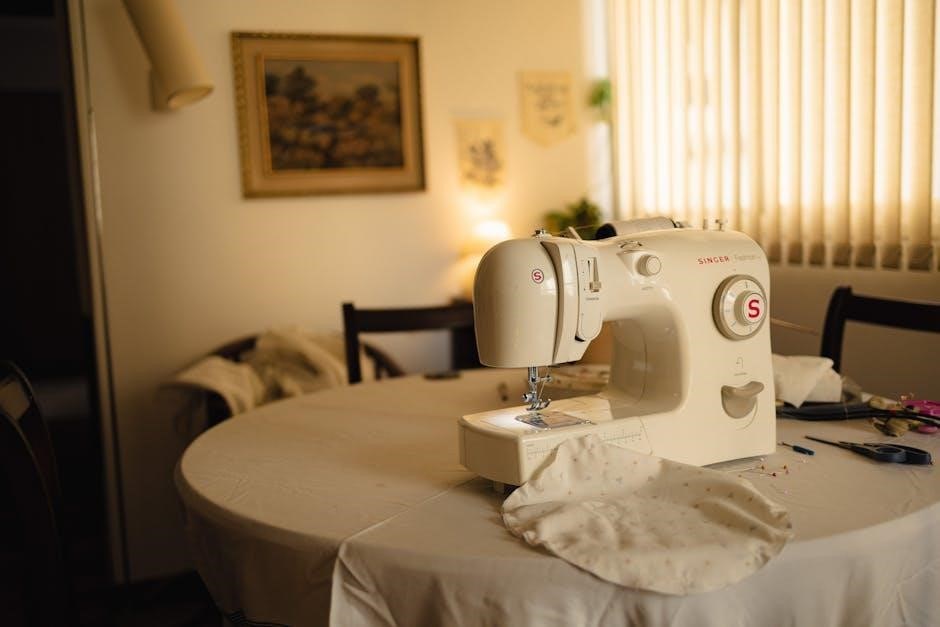
Consult the Singer E99670 manual, found on platforms like the Internet Archive and ManualsOnline.com (copyright 2025 Inmar-OIQ, LLC), for specific lubrication points. Generally, only a few areas require oiling. Apply sewing machine oil sparingly to the bobbin race, hook, and any points indicated in the manual’s diagrams. Over-oiling attracts lint and can cause issues. Use only sewing machine oil; other lubricants may damage the machine. Regular, careful lubrication maintains optimal performance and extends the machine’s lifespan.
Presser Foot Applications
The Singer E99670 manual, accessible via resources like the Internet Archive and ManualsOnline.com (copyright 2025 Inmar-OIQ, LLC), details various presser foot applications. A standard foot suits everyday sewing. Specialty feet, sold separately, expand capabilities. Examples include a zipper foot for close stitching, a buttonhole foot for consistent results, and an appliqué foot for decorative work. Refer to the manual for foot selection guidance based on fabric and desired stitch type, maximizing sewing precision and creativity.
Standard Presser Foot Uses
The Singer E99670’s standard presser foot, detailed in manuals found on platforms like the Internet Archive and ManualsOnline.com (copyright 2025 Inmar-OIQ, LLC), is incredibly versatile. It’s ideal for straight and zigzag stitching on most fabrics. Use it for general sewing tasks – constructing garments, quilting, and basic repairs. Ensure proper pressure adjustment for optimal fabric feed. The manual emphasizes its suitability for everyday projects, providing a solid foundation for various sewing techniques.
Specialty Presser Feet
The Singer E99670, as detailed in resources like ManualsOnline.com and the Internet Archive (copyright 2025 Inmar-OIQ, LLC), benefits from a range of specialty presser feet. These enhance capabilities beyond basic sewing. Options include a zipper foot for close-stitch applications, a buttonhole foot for consistent results, and a blind hem foot for invisible hems. Additional feet cater to specific fabrics or techniques, expanding the machine’s versatility and allowing for more complex projects.
Needle Guide and Selection
Proper needle selection is crucial for optimal Singer E99670 performance, as outlined in available manuals (sourced from the Internet Archive and ManualsOnline.com, copyright 2025 Inmar-OIQ, LLC). Different fabrics require different needle types – universal, ballpoint, or stretch. Needle size correlates with fabric weight; finer fabrics need smaller needles, while heavier materials demand larger ones. Consulting a needle size chart ensures correct pairing, preventing skipped stitches and fabric damage, ultimately extending the machine’s lifespan.
Choosing the Right Needle Type
Selecting the correct needle for your Singer E99670, as detailed in manuals available via resources like the Internet Archive and ManualsOnline.com (copyright 2025 Inmar-OIQ, LLC), is paramount. Universal needles suit woven fabrics. Ballpoint needles are ideal for knits, preventing runs. Stretch needles excel with spandex and lycra; Denim needles handle heavier materials. Embroidery needles feature a larger eye for thicker threads. Always match the needle type to your fabric for smooth, professional results and to avoid damage.
Needle Size Chart
Referencing the Singer E99670 manual, accessible through platforms like the Internet Archive and ManualsOnline.com (copyright 2025 Inmar-OIQ, LLC), is crucial for needle selection. Size 80/12 suits fine fabrics; 90/14 for medium weights like cotton. Use 100/16 for heavier fabrics like denim. Larger numbers indicate thicker needles. Always test on a scrap before starting your project. Incorrect sizing can cause skipped stitches or fabric damage. Proper needle size ensures optimal stitch quality and machine performance.

Belt Installation and Replacement
Consult the Singer E99670 manual, found on resources like the Internet Archive and ManualsOnline.com (copyright 2025 Inmar-OIQ, LLC), for detailed belt replacement instructions. Disconnect power before starting! Carefully remove the machine’s housing to access the belt. Ensure the new belt is the correct size and type. Route the belt around the motor pulley and the handwheel, ensuring a snug fit. Reassemble the machine and test its operation. A properly installed belt is vital for smooth, efficient sewing.
Motor and Electrical Components
The Singer E99670’s motor, detailed in manuals available via the Internet Archive and ManualsOnline.com (copyright 2025 Inmar-OIQ, LLC), requires minimal maintenance. Regularly check the power cord for damage and ensure a secure connection. Avoid operating the machine in damp environments. Basic motor maintenance involves keeping the ventilation slots clear of dust. Never attempt to disassemble or repair the motor yourself; consult a qualified technician for electrical issues. Always disconnect power before any inspection.
Basic Motor Maintenance
Maintaining the Singer E99670’s motor, as outlined in resources like ManualsOnline.com and the Internet Archive (copyright 2025 Inmar-OIQ, LLC), is straightforward. Regularly inspect the motor housing for dust accumulation, using a soft brush to gently clean ventilation openings. Never use liquids. Ensure the power cord is undamaged and properly connected. Avoid operating in humid conditions. If the motor exhibits unusual noises or performance issues, discontinue use and seek professional repair—do not attempt self-repair.
Accessing the Online Manual (Internet Archive)
The Singer 50T8 E99670 user manual is readily available on the Internet Archive (archive.org), as of August 19, 2020. This digital resource offers free download, borrowing, and streaming access. The item size is 75.2MB, added to the manuals collection. Users can search metadata, text contents, and archived websites. The archive supports users with print disabilities and provides an embed option for descriptions. Access is facilitated through a direct link, preserving valuable historical documentation (ark:/13960/t3911k38c).
Manual Availability on ManualsOnline.com
The Singer 50T8 E99670 manual is also conveniently accessible on ManualsOnline.com. This online platform provides the instruction manual in multiple languages – English, French (“Manuel d’Instruction”), and Spanish (“Manual de Instrucciones”).
The manual is protected by copyright © 2025, held by Inmar-OIQ, LLC, reserving all rights.
ManualsOnline.com utilizes cookies during website visits, ensuring user experience and functionality while accessing this valuable resource.
Copyright Information (2025 Inmar-OIQ, LLC)
Regarding the Singer 50T8 E99670 sewing machine manual, all rights are explicitly reserved by Inmar-OIQ, LLC, with the copyright year established as 2025. This copyright extends to the entirety of the manual’s content, including text, illustrations, and any associated digital files.
Unauthorized reproduction, distribution, or modification of this manual is strictly prohibited without prior written consent from Inmar-OIQ, LLC, safeguarding their intellectual property.

Additional Resources and Support
These platforms offer valuable resources for troubleshooting and understanding your machine’s features.